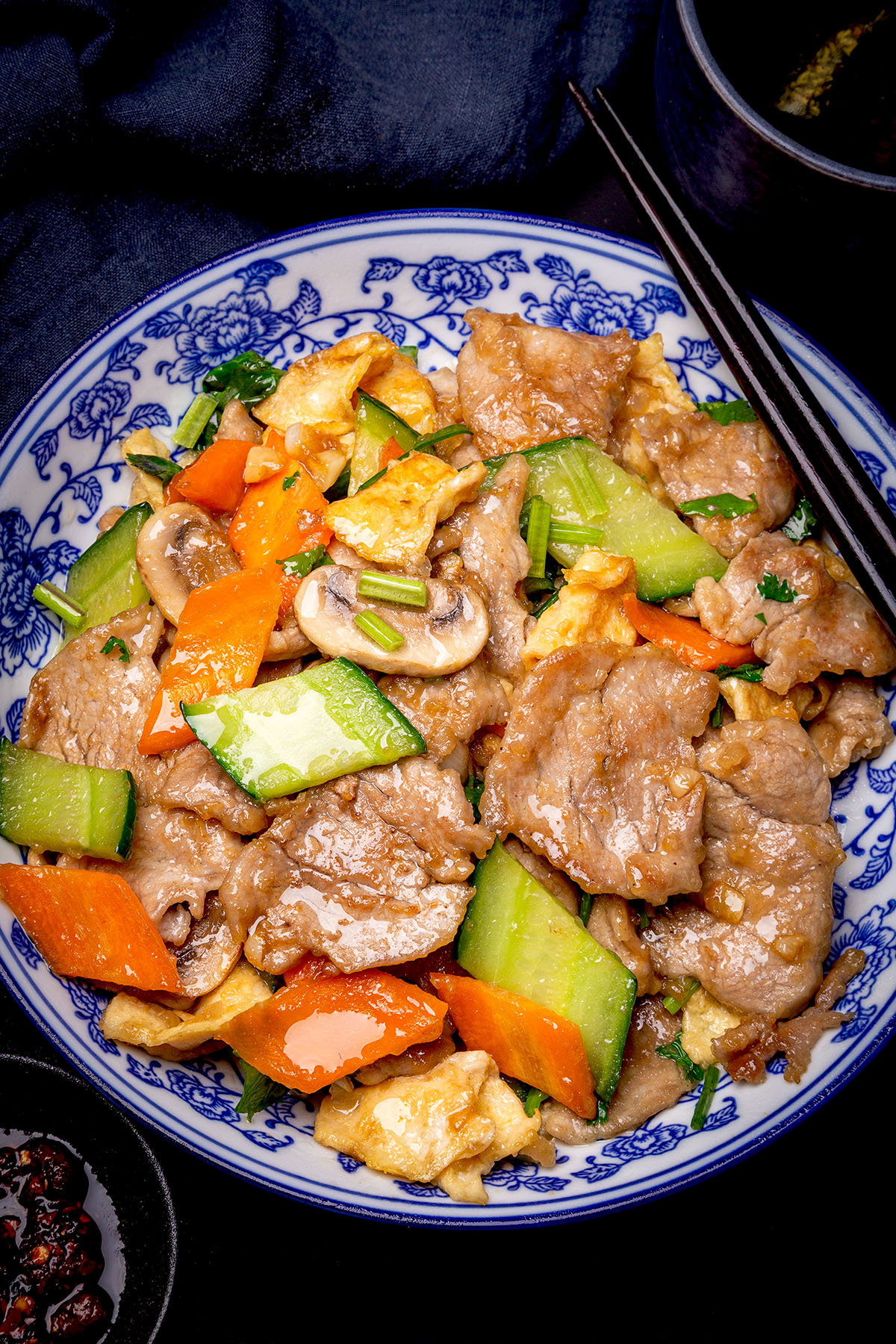
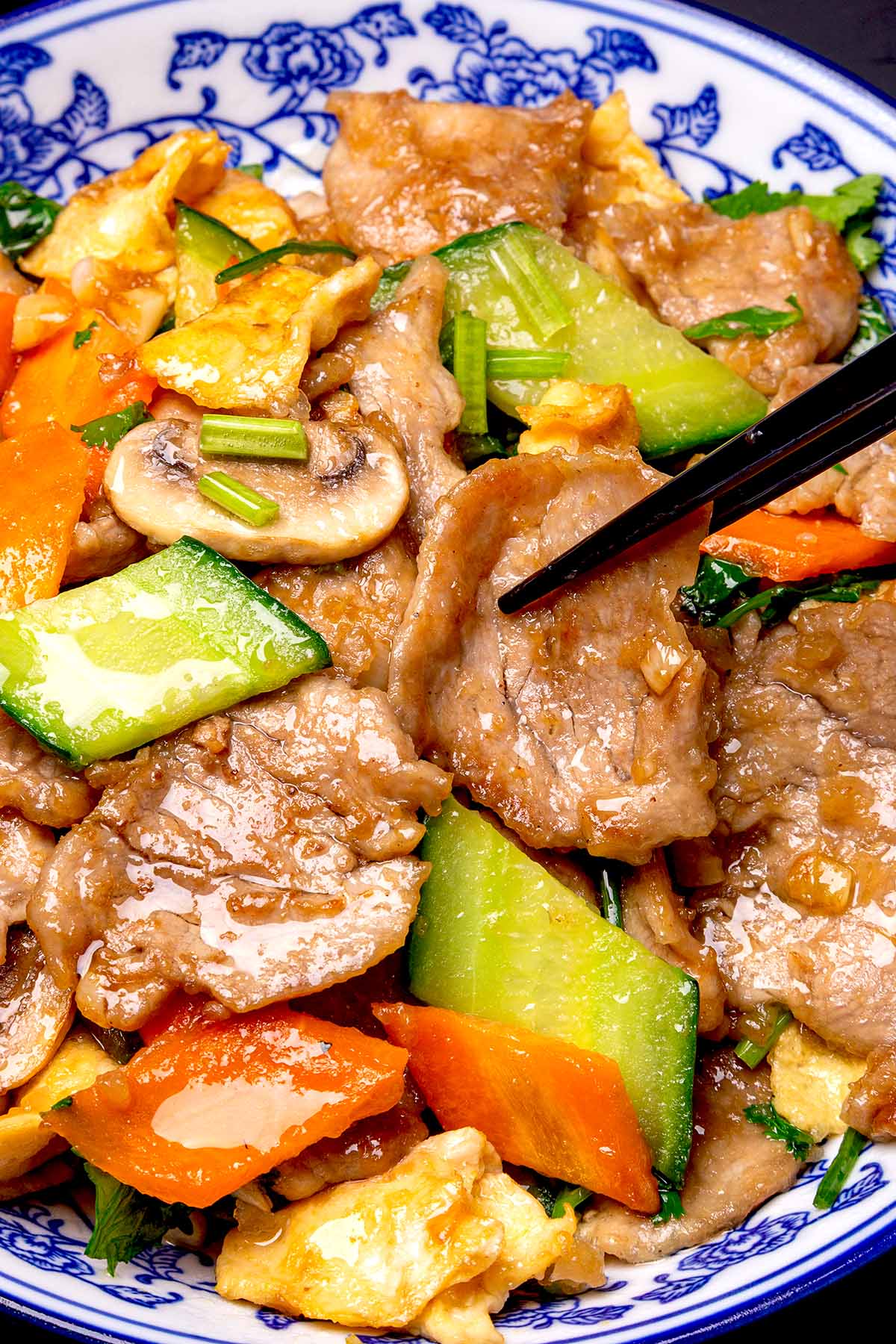
Tender pork tenderloin stir fry with egg and vegetables – an easy Chinese homemade dish ready in just 15 minutes.
About this Chinese Pork Tenderloin Stir-Fry recipe
This is one of those everyday dishes I often make at home, using simple ingredients like pork and fresh vegetables. Unlike takeout, this Chinese homemade dish feels real, easy, and affordable.
The marinated pork tenderloin is perfect for a stir fry – tender and juicy. Paired with eggs and fresh vegetables, it makes a truly tasty and healthy meal.
Give it a try – it could become a regular, go-to meal like in many Chinese homes. 😊
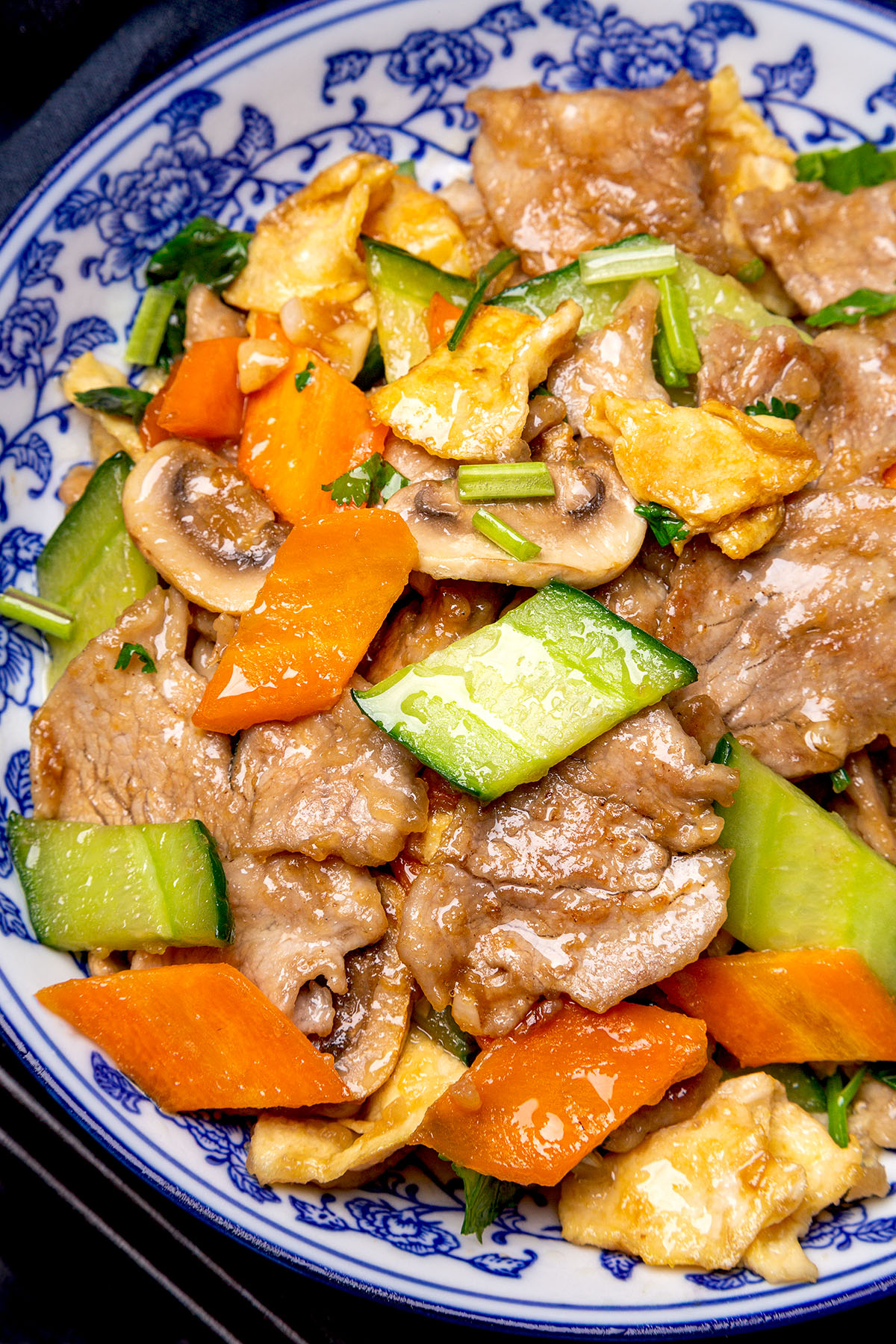
How to Choose and Prepare Pork for Chinese Stir Fry
Pork is a big part of Chinese cooking, and I’ve learned a few tips for getting it right.
- Origin matters: Pork flavour varies by region, and I’ve found that pork from Europe and Asia tastes sweeter and has a milder aroma – making stir fries much more enjoyable.
- Preferred cut – Pork tenderloin (fillet): In Chinese cooking, pork tenderloin is the go-to cut for stir-fries. It’s lean, tender, and cooks quickly without drying out.
- Marinating for tenderness: There are many ways to marinate and tenderise pork – some people use egg white and oil. I keep it simple here since the pork fillet is already tender. Pork is often coated in cornstarch. The cornstarch locks in juices, keeps the meat tender, and gives a glossy finish to the stir-fry.
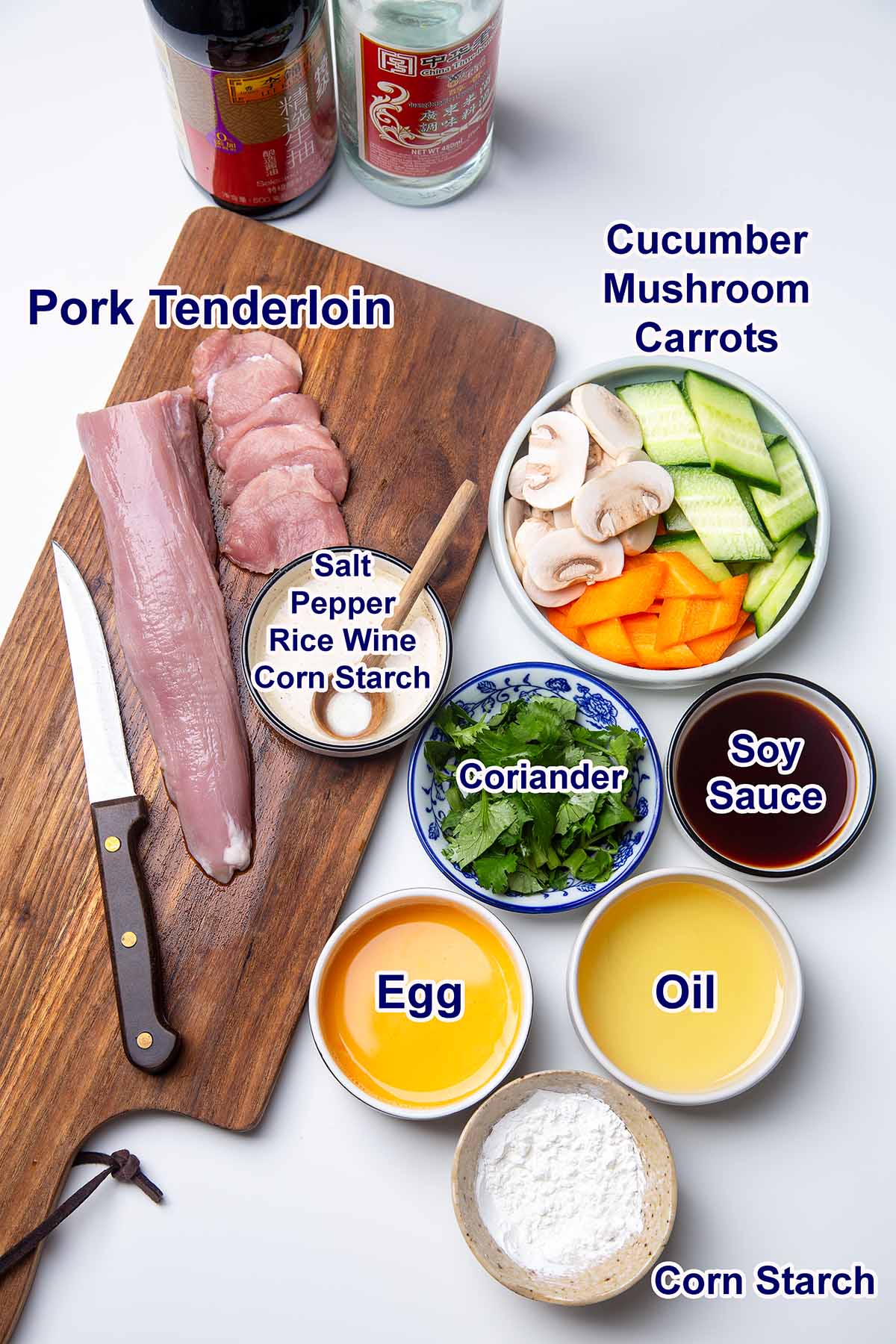
Ingredients for Chinese Pork Stir Fry Recipe
- Pork: I use pork tenderloin for this recipe, but chicken thighs work too. I slice it about half a coin thick, cutting against the grain so it stays tender while holding its shape.
- Veggies: Cucumber, mushrooms, and carrots work well here, but they can be swapped for other vegetables. Just make sure the cooking times are similar so everything cooks evenly. (Learn how to cut cucumbers and carrot into rectangular shapes from here)
- Coriander: Coriander works really well with all the ingredients in this recipe. I tried using spring onions, but they don’t bring the same flavour.
- Oil: This recipe needs enough oil to create that sizzling effect. I usually go with olive oil as a healthier option. Any leftover oil can be reused for cooking or tossed with noodles.
Instructions for Pork Tenderloin Stir Fry
Step 1: Marinate the pork
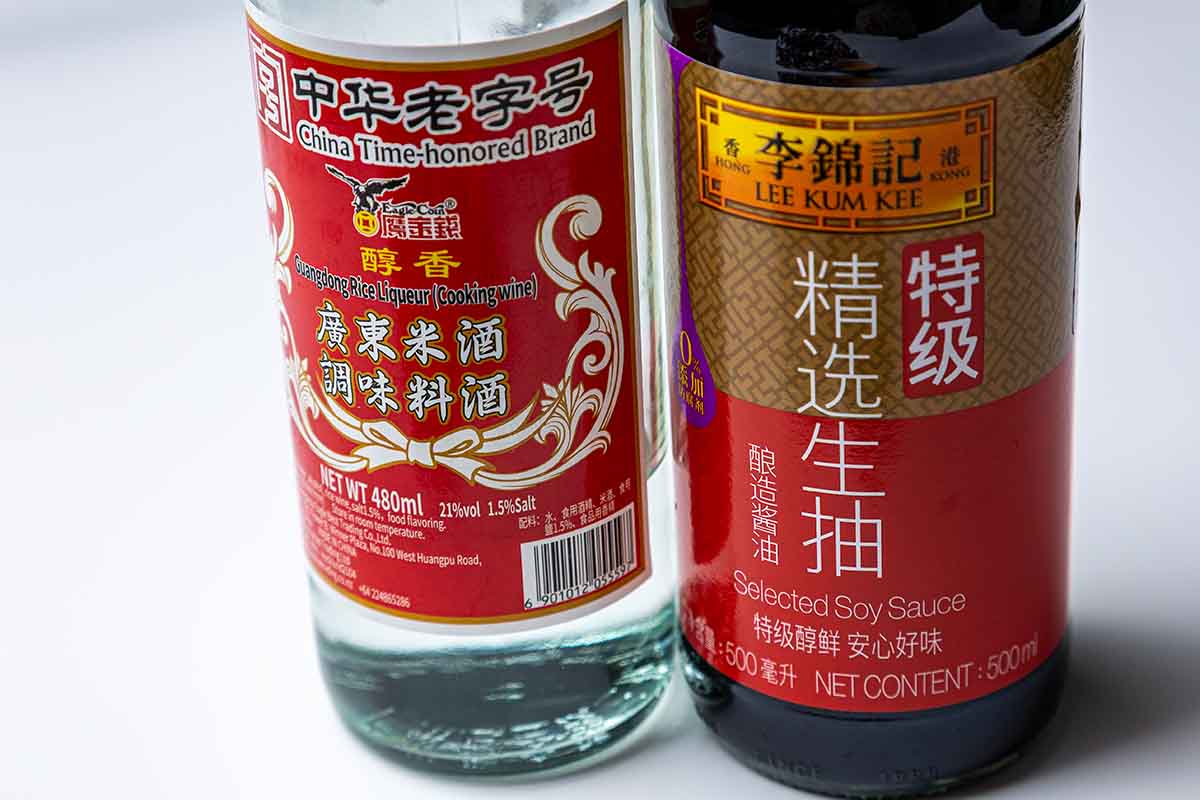
- Combine the pork slices with salt, white pepper, rice wine, and cornstarch. Mix everything well and set aside.
- Mix 1 tablespoon of cornstarch with 2 tablespoons of water until smooth.
Step 2: Cook ingredients separately
- Bring a pot of water to a boil, add the cucumber, mushroom and carrot, and cook until slightly tender. Drain and set aside.
- Heat 1 tablespoon of oil in a non-stick pan over medium heat, add the whisked egg, and cook until just set. Set aside.
- In the same pan, heat another tablespoon of oil, add the marinated pork, separate into pieces, and cook through. Set aside.
Step 3: Mixing and Stir-Fry
- Heat 1 tablespoon of oil in a pan over medium heat, then add garlic and cook until lightly browned.
- Return the vegetables (cucumber, mushroom and carrot), egg, and pork to the pan. Add soy sauce, mix well, and cook, letting everything sizzle, stirring every 5–10 seconds. Cook for about 2-3 minutes.
- Pour in the cornstarch-water mixture and stir until well combined.
- Add coriander, give a final mix, and serve.
Tips for Cooking Pork Stir Fry
- Non-stick pan: Woks can be tricky at home since they need high heat and lots of oil to season properly. Pork coated in cornstarch tends to stick, so I recommend going with a non-stick pan – it just makes life easier. 😊
- Vegetables: Since the vegetables will cook again during the stir fry, make sure they’re slightly undercooked so they hold their shape and don’t turn mushy.
- Oil Adding: Modern Chinese cooking often uses a “double oil” technique. This means adding oil at the start for cooking, then a little more at the end for a glossy, shiny finish. You can try this for a more appealing look.
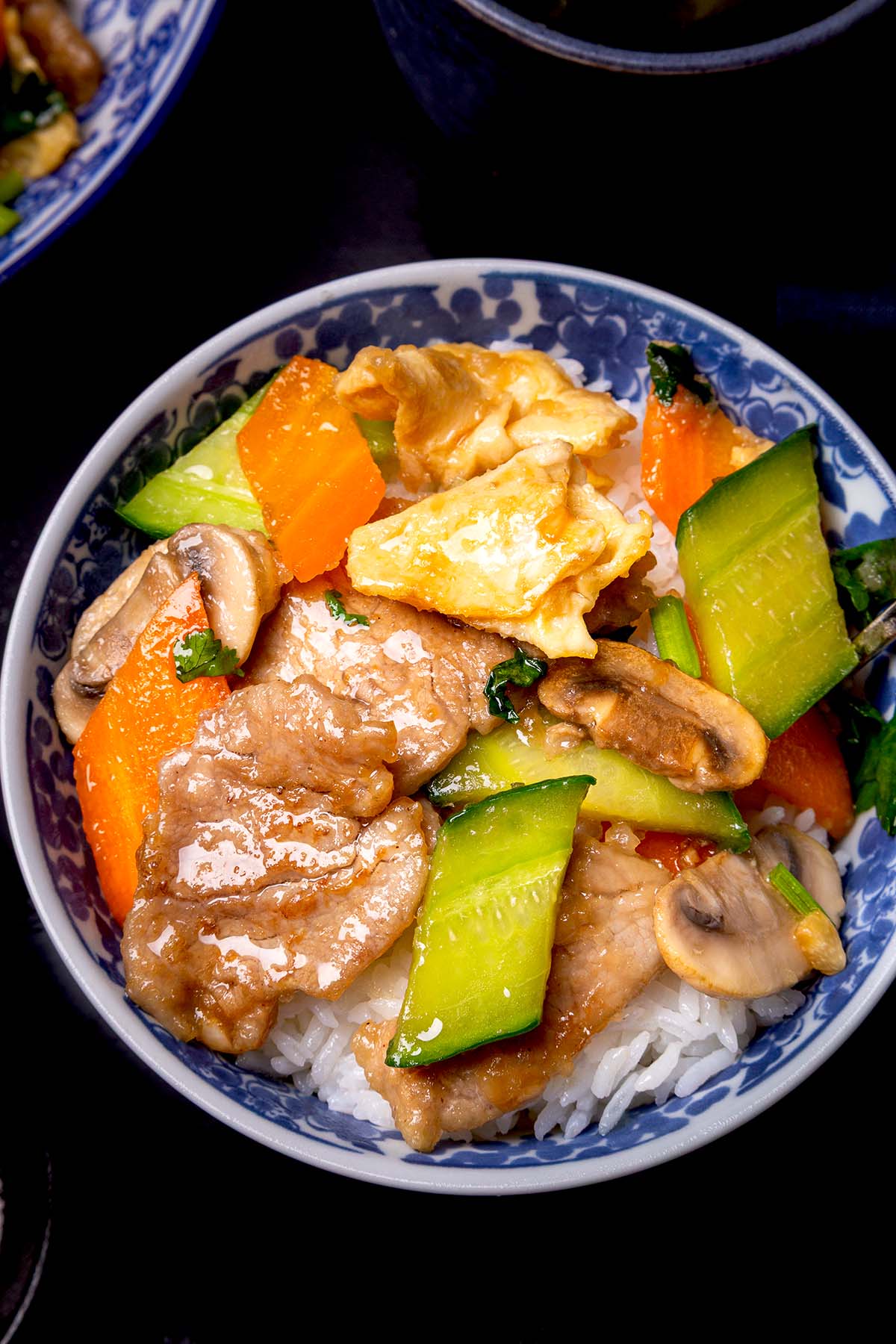
This pork fillet stir fry is a tasty way to sneak more veggies into your meals.
Give this recipe a try – you’ll see how easy and flavourful it is. 👩🍳

Chinese Pork Tenderloin Stir Fry
Ingredients
- 200g Pork tenderloin (sliced to half coin thick)
- 3-4 mushroom (sliced)
- 1/2 cup cucumber (sliced)
- 1/2 cup carrots (sliced)
- 1 egg (whisked)
- 1/2 cup coriander (chopped)
- 3 garlic (finely chopped)
- 3 tablespoon oil (more or less to your liking)
- 1 tablespoon soy sauce
- 2 tablespoon corn starch (One tablespoon for marinating pork, another one for thickening the sauce)
- 1 pinch salt
- 1/3 teaspoon white pepper powder
- 1 tablespoon rice wine
- 2 tablespoon water
Instructions
Marinate the pork
- Combine the pork slices with salt, white pepper, rice wine, and 1 tablespoon of cornstarch. Mix everything well and set aside.
- Mix 1 tablespoon of cornstarch with 2 tablespoons of water until smooth.
Cook ingredients separately
- Bring a pot of water to a boil, add the cucumber and carrot, and cook until slightly tender. Drain and set aside.
- Heat 1 tablespoon of oil in a non-stick pan over medium heat, add the whisked egg, and cook until just set. Set aside.
- In the same pan, heat another tablespoon of oil, add the marinated pork, separate into pieces, and cook through. Set aside.
Mixing and Stir-Fry
- Heat 1 tablespoon of oil in a pan over medium heat, then add garlic and cook until lightly browned.
- Return the vegetables, egg, and pork to the pan. Add soy sauce, mix well, and cook, letting everything sizzle stirring every 5–10 seconds. Cook for about 2-3 minutes.
- Pour in the cornstarch-water mixture and stir until well combined.
- Add coriander, give a final mix, and serve.
Recipe Notes:
- Pork: I use pork tenderloin for this, but chicken thighs work too. I slice it about half a coin thick, cutting against the grain so it stays tender while holding its shape.
- Veggies: Cucumber, mushrooms, and carrots work well here, but they can be swapped for other vegetables. Just make sure the cooking times are similar so everything cooks evenly.
- Coriander: Coriander works really well with all the ingredients in this recipe. I tried using spring onions, but they don’t bring the same flavour.
- Oil: This recipe needs enough oil to create that sizzling effect. I usually go with olive oil as a healthier option. Any leftover oil can be reused for cooking or tossed with noodles.
- Non-stick pan: Woks can be tricky at home since they need high heat and lots of oil to season properly. Pork coated in cornstarch tends to stick, so I recommend going with a non-stick pan – it just makes life easier.

- Vegetables: Since the vegetables will cook again during the stir fry, make sure they’re slightly undercooked so they hold their shape and don’t turn mushy.
- Oil Adding: Modern Chinese cooking often uses a “double oil” technique. This means adding oil at the start for cooking, then a little more at the end for a glossy, shiny finish. You can try this for a more appealing look.
Nutrition Information:
You May Also like: